
In response to a recent survey, we were posed the question: why should I use a database? That is a good question and one that many people ask. It can sometimes feel like using a database would introduce more work into your workflow process, especially in the beginning. It turns out, though, that the time spent entering data in the beginning saves exponentially more time later in your process.
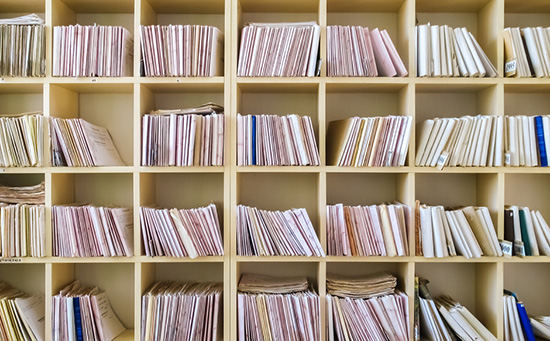
A database is a system that stores and organizes large amounts of information in a single place. Use of such a system increases the efficiency of the business and saves in cost and time. It is sort of like having one big filing cabinet that organizes itself and gives you what you need, when you ask for it. This is much more efficient than having many little filing cabinets, with the same or differing information, and having to gather all of the information about one item from different cabinets when you need it.
Databases also enable collaboration between multiple people working for an organization. Instead of having a file on one person’s computer that tracks certain information, and a separate file on someone else’s computer that tracks that same information, there is one central storage system for the data that only needs to be entered once. While the data is entered only once, it is able to be seen, used and edited by everyone in the organization. There are many issues that arise when it comes time for analyzing or reporting when there are multiple copies of the same data, stored in different places and entered by different people, as everyone has their own idea of how the data should be organized and entered. Trying to reconcile it all in order to create a report can be very frustrating and time consuming.
Databases can help you manage different types of data in one place, for example, child and family information, case information, volunteer information and related professionals can all be stored in one database system, so that you don’t have to build or purchase, and use multiple tools.
Without a database system, tasks have to be done manually and take more time. Databases can categorize and structure your data to suit your needs, and can make reporting quick and easy. The only thing that you need to do is to enter accurate and clean data.
It can sometimes seem like a lot of work to initially enter your data and to make sure that it’s accurate, but it only needs to be entered once and then manipulating it and reporting on it is quick and easy. By using a database, you end up saving yourself hours of work that would have been spent organizing, updating, analyzing and reporting on your data.
You may or may not know this, but CasaManager is a database and can give you all of the benefits mentioned above. From the start of using CasaManager, you can customize the options and settings, such as value lists, so that you give everyone in your organization the same, uniform options to choose from for data entry, helping to ensure clean data throughout the system and in the reports. With the clean and clear user interface, the customizable options and the robust reporting module, CasaManager not only tracks and manages children’s cases, families, advocates and coordinators, but it also enables agencies to quickly provide reports and data for such things as tracking outcomes, and state and national reports. Your workflow from start to finish is more streamlined and automated with data that is auto-populated into different areas of the system, after you enter it just once, and then pulled into reports with no extra data entry.
As mentioned above, starting to use a new database system for the first time can seem daunting. Thankfully, you don’t have to dive into CasaManager alone. We offer webinars and training sessions, along with an online manual and videos to help guide you through the system and learn the most efficient ways to use it.